Email marketing automation for SMEs: what it is and how to get started
Simple flows that save time and sell more without a marketing team
Email marketing automation means creating automated emails that are sent based on your contacts’ behavior.
For example, when someone subscribes, makes a purchase, abandons a cart or clicks a link.
Instead of sending each email manually, you set up an automation flow.
Then the email platform takes care of sending the right message at the right time.
This helps small and medium-sized businesses save time, connect better with their contacts and increase sales efficiently.
Email marketing automation for SMEs doesn’t require complex processes.
On the contrary, you can start with simple, easy-to-configure actions.
A welcome email, a follow-up sequence or a re-engagement campaign are common automations that are easy to set up.
And if you use a good email marketing tool, you can create campaigns, lists, automations and statistics from a single dashboard.
If you’re looking for the general concept, check out the mailing automation guide. And if you’re choosing a tool, see the guide to email marketing for SMEs.
Why email marketing automation is so important for SMEs
Many small businesses have little time, a small staff, and a lot of tasks to manage.
Email marketing automation is so useful because it lets you maintain constant communication without relying on manual actions.
It also prevents interested contacts from going cold.
When someone leaves their email address, they expect to receive something useful soon.
If the response takes too long, the opportunity might be lost.
With an automation, that first response arrives instantly.
Automated emails also let you personalize your relationship with each subscriber. Not everyone needs the same message:
- A new contact needs to build trust
- A recent customer needs follow-up
- An inactive user needs an incentive to return
Automation turns a contact list into a more effective sales system.
How simple email marketing automation for SMEs works
These types of automations are based on simple rules.
These rules connect a user action with an automatic response.
For example:
- A user fills out a subscription form
- The system adds them to a list (group)
- They then receive a welcome email or a discount
- Two days later, they receive another email with answers to common questions, suggestions, success stories, etc.
- Finally, they receive an offer or another discount
This process represents the email automation flow.
Each flow can include:
- Wait blocks
- Email sending
- SMS sending
- Conditions
- Adding/removing tags
- Adding to/removing from groups
However, you don’t need to start with something complex.
The best approach is to create small automations, review their statistics and improve them over time.
This reduces complexity while allowing you to see what works and what doesn’t.
Main benefits of email marketing automation for SMEs
There are multiple benefits to this practice, but the main ones are:
Time savings
You don’t need to perform repetitive tasks.
Therefore, you can dedicate that time to higher-return tasks like selling, serving customers, or creating better content.
Faster response
A lead receives information right when they show interest.
This increases the likelihood of conversion.
Personalization
You can send different messages based on behavior, the customer’s stage, or their interests.
Higher ROI
Generally, email marketing has lower costs than other marketing channels.
And if you use a platform with a generous free plan, you can get started without taking any financial risk.
Statistics: measure everything
You can track opens, clicks, unsubscribes, conversions, and the performance of each campaign.
Email marketing automations every SME needs
Most companies, especially small ones, don’t need advanced automations.
But almost all can benefit from basic flows.
For example:
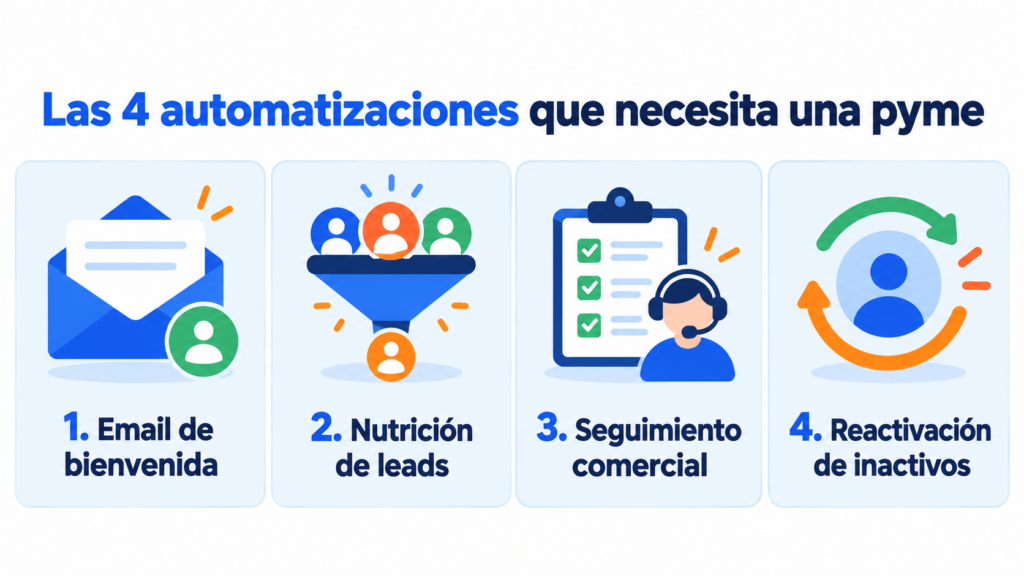
Automated welcome email
The welcome email is one of the most important automations.
It is sent when someone signs up, downloads a resource or subscribes to a newsletter.
This message can introduce the brand and explain what the contact will receive from that moment on.
It can also include a useful link, an initial offer, or a simple call to action.
This basic email automation creates a professional first impression.
Lead nurturing sequence
Contacts usually won’t arrive ready to buy.
Some need to get to know the product better, clear up doubts or compare alternatives.
A nurturing sequence sends several educational emails over a few days.
It can include:
- Tips
- Examples
- Testimonials
- Guides
- Or answers to common objections.
By using this flow, the SME stays in touch without pressuring the potential customer too much.
It also helps turn cold subscribers into hot leads.
Sales follow-up automation
Sales follow-ups often fail due to a lack of time.
If a lead subscribes through a form but no one contacts them, they are lost.
Automation ensures they receive some kind of communication immediately.
You can even set up a flow that checks if they click on a link or not, tags the contacts, sends them another email, etc.
Re-engagement campaign for inactive contacts
Over time, part of your contact list may stop opening emails.
This affects results and can hurt deliverability.
A re-engagement campaign tries to win back those contacts before they are lost completely.
You can send a direct message with a simple question.
You can also offer useful content or a promotion.
If they don’t respond, it’s a good idea to clean your list.
How to create an email marketing automation strategy
Before creating flows, you need to define a goal.
What do you want to create the automation flow for?
Some common goals are more sales, more calls, more downloads, or more web traffic.
Next, identify the key moments in the customer journey.
For example:
- Subscription
- First visit
- Information request
- Purchase
After that, write simple emails with those goals in mind.
Each email should have only one main objective.
It should also include a visible call to action.
For most SMEs, email marketing automation works best when the messages are simple, relevant and arrive at the right time.
Therefore, avoid emails that are too long or generic.
And don’t forget to measure the results, that’s what statistics are for.
If an email gets few clicks, change the subject line, the approach, or the call to action.
Automate your SME’s emails for free
Create your welcome email and your first sequences with the free account: up to 80,000 emails a month to 20,000 contacts.
Which tool to choose for automating an SME’s emails
The tool matters a lot.
An SME needs a platform that is easy to use, affordable and comes with support.
Ideally, choose a solution that lets you create campaigns, lists, forms, automations and statistics without hassle.
It’s also worth considering the sending volume included.
Many free platforms look attractive at first, but are too restrictive with contacts or monthly emails.
This forces you to switch to a paid plan before you get results.
On the other hand, a tool with a generous free account lets you test, learn and grow without financial pressure.
It’s also useful to have technical support, even on the free account.
This way, you can resolve doubts about lists, campaigns, deliverability, or setup.
Email marketing automation for SMEs and profitability
Email marketing automation for SMEs is profitable because it combines low cost and high effectiveness.
You don’t need to pay for ads every time you want to communicate with your audience.
When you have your own list, you can send campaigns to people who have already shown interest.
This drastically reduces reliance on external algorithms.
You can also segment better.
A contact interested in a specific product can receive content related to that interest.
This way, each email has a higher chance of generating clicks and sales.
Profitability also improves when you automate repetitive tasks.
It saves time that can be spent on other things and prevents you from forgetting or failing to complete tasks due to a lack of time.
Common mistakes in email marketing automation for SMEs
The first mistake is sending too many emails
It’s one thing to automate, and another to automate the saturation of your contacts.
If a contact receives a lot of messages in a short time, they may unsubscribe or mark them as spam.
The second mistake is failing to segment
Sending the same thing to your entire database reduces relevance.
The third mistake is forgetting to check statistics
Without statistics, you don’t know which automation is working.
Mailrelay offers comprehensive automation statistics so you always know what works and what doesn’t.
The fourth mistake is not reviewing your flows
An automation can become outdated if prices, services, or links change.
It can even lose its effectiveness over time, or there might be blocks that could be improved.
Therefore, it’s a good idea to review your flows from time to time, as they will accumulate more consistent data.
How to start with free email marketing automation for SMEs
It is best to start with one automation, or a couple, to gain experience.
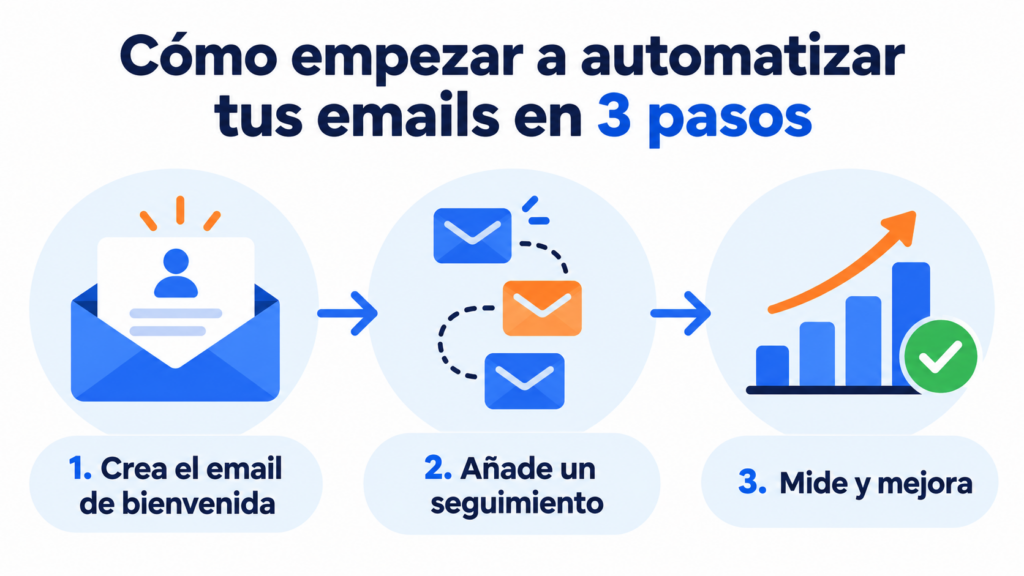
The welcome email is a great choice because it’s the easiest.
For example, you could have three steps:
- A first introductory email
- The second one to answer a common question
- And the third one encouraging a simple action (visiting a page, replying, etc.)
After that, you can create a follow-up automation for interested leads.
For example, the first automation can check whether contacts have clicked a link and, if they have, move them to another group, which would be the “trigger” for the second automation.
This gradual approach allows you to learn without overcomplicating things.
Start your first automation today
A visual editor to build flows without coding, with chat, ticket or phone support on all plans.
Frequently asked questions about email marketing automation for SMEs
What is email marketing automation for SMEs?
It is the use of automated emails to communicate with contacts, leads, or customers based on their actions.
It allows you to send welcome, follow-up, re-engagement, or post-sales messages without doing it manually.
Does an SME need complex automations?
Most of the time, no.
Many SMEs can get good results with simple flows that are easy to create.
A welcome email, a nurturing sequence, and a sales follow-up can be enough to start.
Does email marketing automation for SMEs help sell more?
Yes, because it helps you reach out to each lead at the right time.
It also allows you to educate, remind them of offers, recover customers, and improve the post-sales relationship.
Can I start email marketing automation for free?
Yes.
There are platforms, like Mailrelay, that allow you to create campaigns and automations from a free account.
What matters is checking the limits on contacts, sends and features included.
What metrics should I track in my automations?
You should track opens, clicks, unsubscribes, bounces, and conversions.
It is also advisable to analyze which emails generate the most responses and which need improvement.
What is the first automation an SME should create?
The first one should be the welcome email.
It is easy to set up and improves the new subscriber’s experience from the very first contact.