Does the idea of how to set the price of a product or service terrify you? Don’t know how to do it, or do you just eyeball it?
Or maybe you simply look at your competitors’ prices and undercut them?
Got you there, didn’t I?
It’s very common in online marketing to set prices based on your competitors.
So, in something as important to any business as this, we often simply go with the flow and don’t really know how to set the price of a product.
Just like that.
With the problems that this brings:
- The price is poorly adjusted and we make no profit
- Or it fails to attract customers
This is the main problem we can point to in the short term if we don’t know how to set the price of a product.
But in the medium and long term we could be talking about strategic mistakes that directly affect the business, because make no mistake, price is a major variable in our marketing mix:
- It’s the variable we make our profit from.
- It directly affects how the product is perceived.
- And we have full and quick control over it.
Even so, we often don’t take advantage of it and think that price is just something we have to put on our product.
Not knowing how to set the price of a product properly limits your strategies and damages your image
Let’s look at an example that I hope you’ll find useful.
Pricing for info products
Although this knowledge applies to any product or service.
With many of these info products, you can tell from a mile away that the price was set like this:
It took me this many hours to make, I charge this much per hour, so it’s worth this much.
Or simply:
I’ll give it this price because it seems right to me
What’s the problem with setting prices using those criteria?
It leads to unrealistic prices that don’t convey the real value of the product and to us applying discounts badly.
Haven’t you ever noticed those excessive discounts of 25% or more?
Info products that were “worth” €599 suddenly being sold for €199.
So these discounts aren’t believable and hurt the perceived value of the product for various reasons, which you’ll understand by the end of the article.
Let’s get to it.
Pricing method for info products

Well, a little theory won’t hurt us here as we learn how to set the price of a product.
When setting the price of a product, you should follow these steps, broadly speaking:
Steps to follow to set the price of a product
1) Be clear about the objectives of the company
2) Marketing objectives
3) Pricing objectives
4) Demand estimation
5) Cost estimation and analysis
6) Choose a pricing method and set the final price
Does that seem like a lot of steps?
Let’s go through them in a bit more detail.
1) Be clear about the company’s objectives
In the end, a company’s objectives are usually: to make money
And that depends on the expenses you have, the profits you want to make, etc. There will be a minimum price you can’t go below, or you won’t reach the goals you’ve set (or that, one way or another, are imposed on you, like expenses).
But this is only the first step.
2) Marketing objectives
As we’ve said, price is an important element of your marketing strategy whether you have just one info product or several.
Maybe you want to use a low price on one of your info products to act as a hook for the others?
That way you attract a lot of traffic from customers interested in the low-cost product, who may later become interested in more expensive ones.
Price is a tool, and we have to use it to give ourselves an advantage.
3) Pricing objectives
The price of the product has to be enough to cover the costs.
On every sale? Or once a certain volume is reached?
Should it have a margin that allows us to create discounts later, or is that not necessary?
4) Demand estimation
Here we need to consider whether we already have a subscriber list, whether we’re going to launch marketing campaigns for the new info product, and in general all the advertising efforts we’ll make to promote it.
Estimating demand isn’t easy, because there will also be substitute products, etc.
You also need to consider the type of customer you’re targeting, since not all customers react the same way to price, or to changes in it.
Some products have a price that one person may see as cheap and another as expensive.
Look at this image:
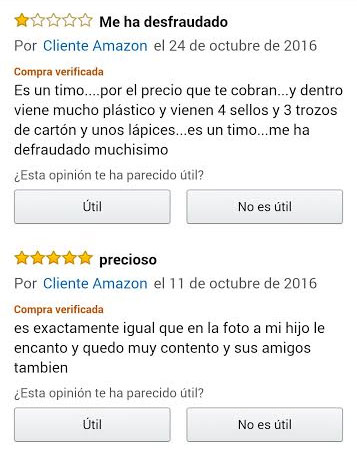
What one person sees as expensive, another sees as fine, perfect and appropriate.
The same goes for luxury products: if the price dropped a lot, they would lose sales.
Can you imagine diamonds at €1? They don’t seem so special anymore, do they?
In any case, the aim is to come up with an approximation.
5) Cost estimation and analysis
This step will be somewhat easier because we can establish expenses and costs in advance.
Both the fixed costs we have and the time and money we’ve invested in the info product, as well as any advertising budgets we may set.
6) Choose a pricing method and set the final price
As a result of all the above, we’ll have to set the price, following or pursuing one strategy or another.
Strategic pricing methods for your info product
In the literature we can find several methods that help us define the price of our products.
Let’s look at some of them.
How to set the price of a product using margins?
This is perhaps the easiest method, since it simply consists of adding a margin to the unit cost.
An info product has no unit costs.
Or maybe it does?
Yes, if each info product you sell has something attached that you have to do, such as a 1-on-1 session with the customer, a review, etc., or the simple support you have to provide for the questions you receive, as well as managing it (refunds, for example).
For example:
Making your info product took you 4 hours. That’s €40. If you also have to give an hour of mentoring for every course sold, and you charge €10 an hour, that’s €10 to add for each one you sell.
If you’re going to invest €500 in advertising and expect to sell 20 units of your info product
If you’re going to invest €500 in advertising and expect to sell 20 units of your info product
Variable costs + (fixed costs / units expected to be sold) €10 + ((€40 + €500) / 20 units) = €37 unit cost
You then have to add the margin you want to make to the unit cost.
For example, €5 per unit, so the final price would be €42
The problem with this method?
Well, only costs are taken into account, nothing else:
- Competitors’ prices aren’t taken into account
- Nor whether it’s a price customers can pay
- Or whether they might even pay more
- And what happens if we apply a discount? Do we lose the margin?
All in all, it’s a strategically limited method, although it’s probably one of the most widely used.
How to set the price of a product using the target method?
Let’s look at it another way.
Imagine you’ve decided to do it the other way around, and you want to sell each info product, a course for example, for €50.
How many do we have to sell so as not to lose money?
Fixed costs / (price at which it has been decided to sell – variable costs) (€40 + €500) / (€100 – €10) = 6 sales
With 6 sales we would already cover the production costs at the set price.
Fewer sales would mean we lose money, so more sales are already profit.
But these have the same flaws as the previous method, although they’re still good methods for finding out our minimum price.
We don’t want to lose money!
And once we know the minimum price, the price at which we’d already be making money and not losing it.
From there we can move on to what I consider the real pricing strategy. A price that can differ greatly from the minimum price we’ve talked about.
Let’s see.
How to set the price of a product based on demand?
How much are your potential customers willing to pay for your course, for your info product?
Okay, maybe it costs you €37 per unit to produce, but what you teach in your course, its value, the value it brings to the customer, may be much greater.
Imagine your course teaches “how to design a website in WordPress” and that a website can roughly cost around €500 on average.
We’re saying, then, that your course can save buyers a lot of money. They could pay €150 for the course and still save money.
As you can see, it’s perfectly feasible and viable to sell the course for much more than its production and marketing cost.
But don’t forget that this requires good analysis to know to what economic extent your info product benefits the buyer. If you wanted to sell your course for €1,000 and buying a website cost €500, you wouldn’t sell as many.
The margin between what potential customers are willing to pay and the selling price can be very delicate.
But in any case, don’t set a price so low that it doesn’t allow you to use pricing strategies like discounts and, also, keep the competition in mind.
How to set the price of a product based on the competition?
Following the same example, if building a website costs €500 on average and you want to sell your course for €150, but it turns out your main competitors are selling similar info products for €399.
Why couldn’t you sell your product at the same or a similar price?
If your brand is as strong as theirs and your product is similar, you could have similar prices.
Even slightly cheaper, to encourage people to buy from you instead of your competitors.
But what if your competitors lower their prices? And they start selling their courses for €100. Or for €20?
Maybe there’s a competitor with access to such a large number of potential customers that they’ll sell so many courses that offering it at €20 is already profitable for them.
And that figure would already be below your unit cost.
What do you do in that case?
It’s no longer as easy as just putting the cost price on the product, is it? More variables come into play.
As you can see, we’re moving further and further away from the simple “I’ll give it this price because I feel like it“.
And we get more and more into calculations and analysis: analysis of potential customers, of costs, of the competition…
How to set the price of a product based on value?
Let’s continue with the example of buying a website.
On average it costs €500, but you want to sell your course for €950
More expensive than buying a ready-made website!
What do you have to do?
Offer more value, of course. In your course you teach how to build the website, but also hold 1-on-1 sessions that will allow the buyer of your info product to also learn:
- How SEO works
- Preparing a visibility and sales strategy
- Working with the website
All in all, it’s a more complete service that gives the customer more, and so you can sell it for a higher price than the cost of getting the website.
You can also do that and earn even more profit, but again we must analyze demand, competition, etc., because the potential customer who would buy that info product probably won’t be the same one who would buy the other.
Best pricing tips
Buyers, your potential customers, understand prices differently than you do. You may believe your product is really worth the €950 you’re asking for it, but to judge whether the price is fair or not, the buyer will use various sources:
- Usual price: if you’ve sold info products before, or have others for sale, the first thing potential customers will assess is whether the new price meets their expectations based on their previous purchases. If the new price is much higher, they’ll wonder why, what the price change is due to. And we’ll need to have something that justifies it.
- Prestige prices: potential customers will compare the price of your info product with other products of higher “quality”, perceived quality that isn’t necessarily real. That is, they’ll compare your product with similar info products from well-known online marketers. If a well-known internet personality sells their product for a lower price than yours, that will be a problem. Because the potential customer will see that your product is more expensive than a product of recognized quality.
- Reference prices: we saw this a little earlier. If similar info products generally fall within a certain price range, potential customers will expect your product to be priced within that range.
- Assimilation: if prices are similar to the competition’s, the potential customer will think the quality is similar.
- Contrast: if the price is very different from the competition’s, the potential customer will think the final product is also different, either higher quality if the price is higher, or the opposite.
As you can see, all of these require extensive study before you define what the final price of your product (or service) will be.
Don’t forget that when you set a price, it must be in line with your marketing strategy
The reason is that, in the end, the price must be consistent with your marketing strategy and your brand, with its recognition, and with the perception your potential customers have of it.
If your brand is well known, you’ll probably be able to charge more for your product.
Also, as we said at the beginning, if you want to attract customers you can offer some products at lower prices, to bring in customers who will later buy your more expensive products.
If your brand isn’t well known, you may want more competitive prices.
One last note on discounts
A moment ago we were talking about the usual price: if your potential customers have no reference for your usual price, they won’t perceive the discount as such.
That is, if it’s your first info product, you’ve just started, and you state that its price is €750 but that you have a discount that brings it down to €125
It may not come across as very believable.
However, if customers already know you, or you have other products at other prices, then the super-low price is easier to justify, since you may be following a penetration strategy so that your new product quickly reaches a large volume.
In general, I think you should be careful with big discounts and apply them only occasionally.
I hope you find this article useful
I hope it serves as a tool when it comes to knowing how to set the price of a product.
At the very least, I hope it gives you a foundation for working out a price that not only earns you money by selling the product, but becomes what it should be: one more marketing tool that helps you outdo the competition.
And now that we’ve reached the end of the post, I’d love to hear about your experience setting prices.
Tell me what criteria you follow to set the prices of your products!
Setting your prices well is only part of the equation: if you also compete in a crowded sector, you’ll want to know the best strategies for selling in saturated markets.