20 examples of creative advertisements
20 ads that defined an era and 10 easy ideas for creating your own

20 ads that defined an era and 10 easy ideas for creating your own
An advertisement is a paid message that a brand spreads through a medium (television, print, radio, outdoor or the internet) to promote a product, service or idea and persuade its audience to take action.
Advertising is part of our everyday lives today. Traditional marketing, together with the widespread use of social media, has created a landscape where we find advertisements in almost every medium.
“In such a competitive advertising environment, you need to know your audience very well and bring a big dose of creativity to stand out from the rest.”
You also need to know the online marketing tools you are going to use to reach that audience.
Among all the online resources we can use to reach them, we have the option of preparing and launching original ads. The kind you don’t see every day.
However, I’m sure you’ll agree with me that inspiration for creating this kind of ad doesn’t strike every day. So, how about we define this concept and look at some creative examples?
They’re sure to give you ideas for your email marketing campaigns, because at the end of the day mass mailing is still a form of advertising.
We’ll tell you all about it here at Mailrelay. Let’s go!
Before we get down to analyzing and reviewing examples of ads full of creativity, let’s start at the beginning. Let’s dig a little into the theory first, shall we?
Email, your most profitable advertising channel
Compared with other ads, email marketing offers one of the best returns on investment. Discover it with Mailrelay.
“An advertisement is a piece of communication created with the clear goal of promoting a product, a service or an event.”
In other words, it’s a message put out with the clear aim of advertising, not just informing people about a specific topic. Here, let’s not confuse being “advertising” with necessarily being “commercial”.
In this sense, an ad is commercial if it tries to sell something or carry out a financial transaction. However, it isn’t commercial if what is being advertised is, for example, a public service.
An advertisement can be launched in almost any format:
Ads can be made up of many different elements, which vary depending on the channel used to distribute them; they can include a slogan, a graphic element, an audio file…
Either way, there are certain characteristics that go a long way toward making an advertisement better and, therefore, helping it reach users easily:
An ad must always be believable if it wants to influence its audience. Even allowing for the exaggeration typical of these ads, they must convey a realistic message that can be considered believable.
As I mentioned at the beginning, if you want to create the best ad, don’t forget that it must include something different that sticks in users’ minds (we’ll see how later).
Although some commercials play with the abstract to encourage reflection through confusion, I prefer to keep things simple. Provide information clearly and concisely, and your ad will be off to a great start.
Even when it creates a parallel reality or a fictional universe, a good advertisement is one that builds empathy through real stories backed by truthful information.
It’s clear that if you don’t invest in launching powerful marketing campaigns but your competitors do, your brand is more likely to be forgotten.
However, there are more compelling reasons that will encourage you to launch your own ads, as they serve these functions:
This is the most basic function of advertising, as it helps inform users about something they may not know exists.
This is the function we all look for in advertising: attracting users and convincing them of the benefits of our product.
As a result, ads are one of the key elements for increasing sales, thanks to attracting potential customers.

Although it’s interesting to define in detail what an advertisement is and what its functions can bring to your marketing strategy, the best way to get inspired is to look at other original ads that have already worked.
Careful! I don’t mean you should base your advertising campaign on plagiarizing other people’s creative work, as this could damage your brand’s reputation, but rather that you should come up with new ideas based on other examples.
Below, I’ve put together a list of all kinds of advertisements that are sure to give you a hand. Shall we take a look?
As I was saying, I’ve selected some examples of advertisements that I personally liked, which worked very well in their day and achieved the goals the company had set.
Specifically, and on the Mailrelay team’s recommendation, I’ve grouped them as follows:
Among the different emotional marketing practices we can apply in an advertisement, there are several approaches that work very well: nostalgia, love, empathy, etc.
Here, humor is one of the secret ingredients in many of the best-performing ads today.
The ones I’ve labeled “funny” here are precisely those that use humor as a communication device to reach users.
“Appealing to feelings and emotions is one of the best ways to connect with your audience and draw them into a certain atmosphere.”
The first of the funny advertisements I’ve chosen as a source of inspiration is this one from Nescafé:
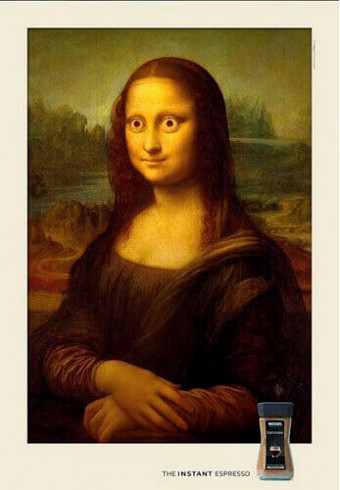
They use classical art and humor to convey the strength of their espresso coffee. Creativity and humor in a single image!
The next ad in this category belongs to a design magazine’s marketing campaign. The campaign was launched when they stopped publishing the print edition in favor of the new digital version.

In this image, Design Elementales shows us the other side of the mobile screen, and with plenty of humor we see the reaction to their new magazine.
The last of the funny advertisements comes from a gym that specializes in CrossFit.
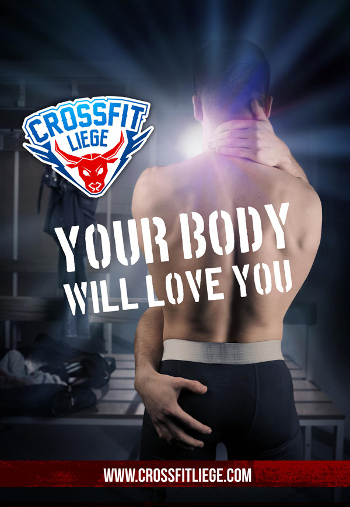
Just one image and a short explanatory sentence turn it into a funny and original piece, don’t you think?
The slogan is an important part of ads because it acts as a representative element of a brand and, when used well, it’s very catchy and easy to remember.
“A slogan is simply the set of words that will put the brand on consumers’ ‘short list’.”
However, not all companies choose to include a slogan in their campaigns. And some use one but fail to make it catchy.
On the other hand, other brands have managed to make their slogan part of everyday street language. In fact, some of these phrases are still used long after the advertising campaigns have ended.
Decades have passed since the famous Scattergories commercial, and yet almost everyone still knows the phrase “aceptamos barco (o pulpo) como animal acuático” (“we’ll accept boat (or octopus) as an aquatic animal”), right?
BMW got many people to keep using expressions like “be water my friend”, even though the X3 ad dates from 2006.
The art of creating good slogans goes back a long way, practically to when products first began to be advertised, before the modern media we know today existed.
Sticking to the ones created since television came along, we find a very long-lived one: “Busque, compare y si encuentra algo mejor, cómprelo” (“Search, compare and if you find something better, buy it”), from Colón detergent, which is still repeated decades later.
Food ads can be extremely varied: from an objective view of what’s on offer to an emotional appeal, even including, at times, a bit of unfair competition.
Nothing is scripted in this sector, as each brand chooses to spread its messages in the best possible way based on its goals and the audience it targets.
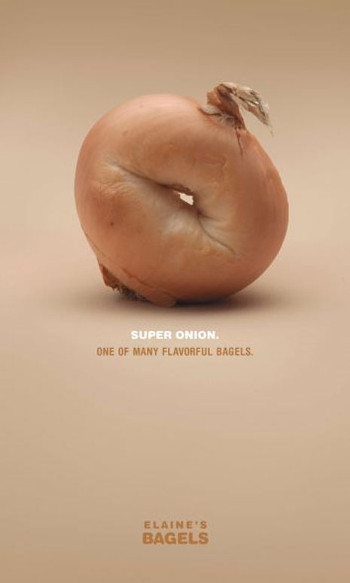
The first one we’ll look at is a very creative ad, with a simple image that represents the concept perfectly. It offers onion-flavored bagels, so it blends both elements in a very visual way.
And from originality to lifestyle. This organic food brand uses its advertisements to offer a way of understanding food and how important it is for the human body.

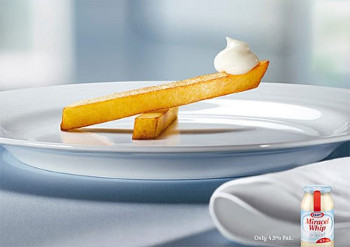
We end this section with humor, thanks to this ad for light mayonnaise. So light it can’t tip the scales with its weight.
A big dose of advertising creativity clearly helps a campaign stick in our memory and end up becoming part of history. But this is something we can hardly control in advance.
Keep in mind that users’ tastes sometimes surprise us: ads that aren’t so well made end up succeeding, while others that were worked on to the fullest are forgotten.
If there’s one thing that helps make an ad famous, it’s having a catchy, easy-to-remember element; it could be the slogan (as we’ve already seen), the jingle or a conversation between the characters.
We’ll start this review with one that isn’t very old but has already become a modern classic. Limón y nada surprised us all with this campaign and its catchy “un palo” (“a stick”), repeated by many.
BMW’s advertisements tend to fall into two of the categories I mention in this post: creative because of their slogan, and popular too.
In any case, the truth is that their ads have always been surprising and have known how to connect with users. With the “Do you like driving?” campaign, they marked a turning point in car advertising.
I haven’t talked about MTV yet, and it’s another of those brands that always takes risks with its campaigns and surprises with almost everything it does.
With “Amo a Laura” (“I love Laura”), they certainly created a huge buzz and broke the mold of classic advertising.
Measure the effectiveness of your campaigns
With Mailrelay you know the CTR, opens and conversions of every email marketing campaign.
I wanted to end this post by giving outdoor advertising a section of its own, because it often goes unnoticed, but when originality is its star element, it grabs everyone’s attention.
In fact, outdoor advertising sends messages that don’t always reach users, as we’re so used to being surrounded by it that we often don’t even pay attention.
That said, when outdoor advertisements are good, they leave no one indifferent. Good examples are these 3 surprising creative pieces:
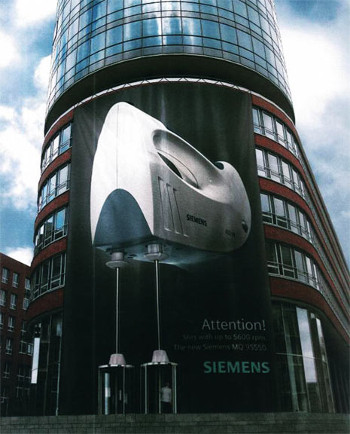
Siemens and its blender made from a building’s revolving doors.
Smart and its car so small it almost fits in a street poster panel.
Absolut and its custom bus stop.

The previous fifteen are years old. These five are more recent and still appear on every list of great campaigns. They all won awards at the Cannes Lions festival.
16. Burger King, “Moldy Whopper” (2020). The brand showed a burger rotting over 34 days. It was their way of proving that it no longer contained artificial preservatives. A disgusting image turned into a selling point.
It works because it shows the proof instead of promising it. It won the Outdoor Grand Prix at Cannes Lions 2021.
17. Ruavieja, “Tenemos que vernos más” (“We need to see each other more”) (2018). Leo Burnett worked out with real people how many days they had left to spend with their friends and family. The number was so small it was moving.
The ad racked up almost 8 million views on YouTube before premiering on television. The lesson: a personal fact carries more weight than any adjective.
18. Dove, “Real Beauty Sketches” (2013). A forensic sketch artist drew several women based on how they described themselves. He then drew them based on a stranger’s description. The second portrait was always kinder.
The Ogilvy Brazil campaign won the Titanium Grand Prix at Cannes Lions 2013. It relies on an uncomfortable truth that almost everyone recognizes.
19. Apple, “Shot on iPhone” (2015). Apple filled billboards and bus shelters around the world with photos taken by users on the iPhone 6. The product barely appeared: what appeared was what you could do with it.
It’s a textbook example of user-generated content. It won a Gold Lion in the outdoor category in 2015.
20. Spanish Christmas Lottery, “Justino” (2015). The animated story of a night watchman at a mannequin factory. He never crosses paths with his coworkers, but he leaves them little surprises every night. In the end, on the day of the draw, they return the gesture.
With it, Leo Burnett Madrid won the Cyber Grand Prix at Cannes Lions 2016. The product takes a back seat and emotion comes first.
| No. | Ad | Technique used | What you can apply |
|---|---|---|---|
| 1 | Nescafé (classical art) | Visual humor | Mix something familiar with your product |
| 2 | Digital design magazine | Humor and a change of format | Tell a change through a scene |
| 3 | CrossFit gym | An image and a single sentence | Say a lot with very little |
| 4 | Scattergories, “aceptamos barco” | Memorable phrase | Find a phrase people repeat on their own |
| 5 | BMW, “Be water, my friend” | Quote and slogan | Associate the brand with an idea |
| 6 | Colón, “Busque, compare…” | Challenge to the consumer | Challenge people to compare if you trust your product |
| 7 | Onion bagels | Visual fusion | Merge the product with its flavor |
| 8 | Organic food | Lifestyle | Sell what the product represents |
| 9 | Light mayonnaise | Exaggeration | Exaggerate the main benefit |
| 10 | Limón y nada, “un palo” | Catchy tagline | Create your own expression |
| 11 | BMW, “Do you like driving?” | Question to the audience | Ask instead of stating |
| 12 | MTV, “Amo a Laura” | Parody and mystery | Spark curiosity before explaining |
| 13 | Siemens, revolving doors | Outdoor advertising | Use the space as part of the ad |
| 14 | Smart on a street poster panel | Playing with the medium | Turn size into the message |
| 15 | Absolut, bus stop | Customized medium | Surprise people where they least expect it |
| 16 | Burger King, “Moldy Whopper” | Visual proof | Demonstrate instead of promising |
| 17 | Ruavieja, “Tenemos que vernos más” | Personal fact | Help the audience see themselves in it |
| 18 | Dove, “Real Beauty Sketches” | Social experiment | Start from a truth about your audience |
| 19 | Apple, “Shot on iPhone” | User content | Let your customers speak for you |
| 20 | Lottery, “Justino” | Animated story | Move people before selling |
Taking a quick look at this selection of examples of creative advertisements, we can say that many of them have marked a turning point in the history of communication and advertising.
In other words, we can’t say that creativity isn’t key to standing out from the competition (especially in today’s landscape).
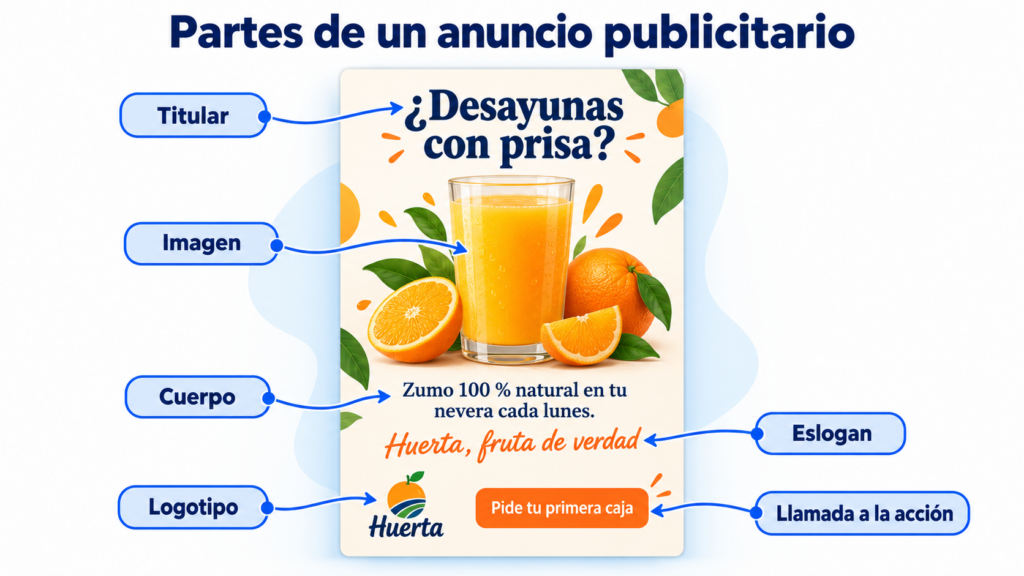
Almost all ads share the same pieces, whether they’re on television or on a social network. You don’t need to use them all.
| Part | What it’s for | Example (Huerta Juices, a made-up brand) |
|---|---|---|
| Headline | Grab attention in one second | “Rushing through breakfast?” |
| Image or video | What is seen first and remembered | A glass of freshly squeezed juice |
| Body | Explain the benefit | “100% natural juice in your fridge every Monday.” |
| Slogan | Identify the brand | “Huerta, real fruit” |
| Logo | Sign the ad | The Huerta Juices logo |
| Call to action | Say what to do now | “Order your first box with a 20% discount” |
The slogan and the headline are often confused. The headline changes with every ad. The slogan stays with the brand for years. If you’re looking for inspiration for yours, here are lots of slogan examples.
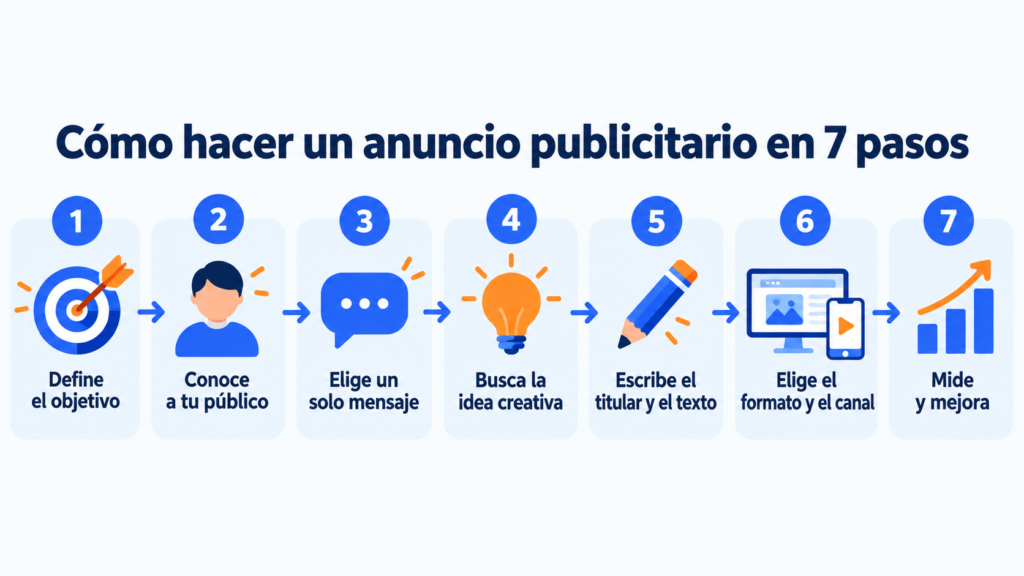
A good ad doesn’t start with a brilliant idea. It starts with a few simple questions. These are the steps agencies follow, adapted for a small business or a school assignment.
Do you want people to get to know you, visit your store or buy today? Each goal calls for a different ad. Write it down in one sentence before you think about the design.
Think of a specific person: their age, what worries them and where they spend their time. That description is your buyer persona. If you don’t know who you’re talking to, the message falls flat.
The most common mistake is trying to say everything. Choose the benefit that matters most to your audience and leave the rest for another ad.
This is where the humor, exaggeration or emotion you’ve seen in the examples come in. A good idea usually comes from a truth about the audience, what advertising calls an insight. Further down you’ll find 10 ideas ready to adapt.
Short sentences, a clear benefit and a call to action. If you’re struggling to get started, use a copywriting formula such as AIDA (attention, interest, desire and action). You’ll find them explained in these 5 copywriting formulas.
The same message changes on a poster, in a 15-second video or in an email. Choose the channel where your audience is and adapt the format to it. In the section on types of ads you’ll find the most common options.
Publish, look at the results and try another version. An A/B test compares two headlines or two images with similar audiences. That way you know what works without guessing.
If you need an ad for your business or for a school assignment, these ideas give you a starting point. Each one comes with an example from a made-up brand that you can adapt.
It’s the trick behind the mayonnaise that doesn’t tip the scales. Take the benefit to the extreme without it becoming unbelievable.
Ruta Backpacks: “So light your back will forget you’re wearing it.”
Like the onion-shaped bagel. Look for an image that blends the product with its flavor, its origin or its result.
Huerta Juices: an orange cut in half that, on the inside, is a glass full of juice.
It works with any product that changes something visible: a house, someone’s skin or their level of English.
Speak Academy: “September: ‘Hello, my name is…’. June: your first job interview in English.”
Start with the situation your audience faces every day. Then present your product as the easiest way out.
Cocina en 10 app: “It’s nine o’clock and you don’t know what to make for dinner? 10-minute recipes with what you have in the fridge.”
A specific number grabs more attention than an adjective. It must be true and easy to understand.
La Espiga Bakery: “Every morning we bake 600 loaves. By 11, there are none left.”
A real quote from someone who already buys from you builds more trust than any promise from the brand.
Gómez Garage: “‘They fixed it in a day and explained everything to me.’ Lucía, a customer since 2019.”
A well-chosen double meaning is remembered for years. That’s the case with many of the slogans you’ve seen above.
Pétalo Florist: “Give flowers. Get kisses.”
Like BMW’s “Do you like driving?” A question makes people think about the answer, and that’s already attention.
Activa Gym: “When was the last time you climbed the stairs without stopping?”
Humor works if the audience recognizes themselves in the scene. It doesn’t have to be a joke: something that makes people smile is enough.
Exprés Laundry: “For those whose bedroom chair is piled with ‘almost clean’ clothes.”
A deadline or limited stock pushes people to decide. Use it honestly: if the offer keeps coming back, it stops working.
Paso Shoes: “This weekend only: second pair half price.”
Advertisements can take a variety of formats and media, each with its own characteristics and advantages. Here are some common types of advertisements:
These ads appear in print media such as newspapers, magazines, brochures and billboards. Print ads can be effective for reaching a specific, local audience.
In addition, print advertising can have a longer shelf life, as readers can keep printed publications and look through them again over time.
Television ads are a popular and effective form of advertising, as they combine visual and audio elements to tell a story or present a product.
Television makes it possible to reach a mass audience, but it can also be expensive in terms of production and buying ad space.
Radio ads are a traditional form of advertising that uses audio messages to promote products or services.
Radio can be an efficient and inexpensive medium, especially for reaching local and specific audiences.
Digital ads are shown on online platforms such as websites, social media, mobile apps and search engines.
Digital advertising offers a wide range of formats, such as display ads, video ads, search ads and native ads.
Digital advertising allows for precise targeting and measurement, making it easier to track ad performance and optimize campaigns.
This type of advertising includes billboards, public transportation ads, street poster panels and other formats placed in public spaces.
Outdoor advertising is effective for building brand awareness and reaching a wide audience moving around the city.
Point-of-sale advertising takes place where the purchase is made, such as retail stores, supermarkets and shopping malls.
These ads can include product displays, special promotions and free samples to boost sales of specific products.
A promotional email is also an advertisement. The difference is that it reaches people who have given their permission to receive it. That’s why it usually costs less and is easier to measure.
In a newsletter you can use the same parts as on a poster: headline (the subject line), image, copy, slogan and a button as the call to action.
These are just a few examples of the types of advertisements companies can use in their marketing campaigns. The choice of format and medium will largely depend on the campaign’s goal, the budget and the target audience.
| Type of ad | Where it appears | Main advantage | Example |
|---|---|---|---|
| Newspapers, magazines, brochures | It’s kept and reread | A supermarket deals flyer | |
| Television | TV and streaming platforms | Reaches lots of people at once | Christmas ads |
| Radio | Stations and podcasts | Cheap and close to the audience | A local store’s radio spot |
| Digital | Websites, search engines and social media | Targeting and measurement | An Instagram ad |
| Outdoor | Billboards, bus shelters, transportation | Seen many times a day | The “Shot on iPhone” billboards |
| Point of sale | Stores and supermarkets | Acts right before the purchase | A display stand with samples |
| The inbox | An audience that has given permission | A newsletter with an offer |
Companies use a variety of strategies to promote their products or services and reach their target audience. Here’s a description of some of these strategies:
Emotional marketing is based on the idea that purchasing decisions are driven largely by emotions.
This strategy involves creating ads that trigger specific emotions in the audience, such as happiness, nostalgia, surprise or sadness, with the aim of building an emotional connection with the brand and increasing the likelihood of purchase.
Guerrilla marketing is an unconventional advertising strategy that aims to surprise people and capture their attention through creative and unexpected tactics, often on a small budget.
It can include interventions in public spaces, undercover advertising and flash mobs, among other actions.
This strategy is based on working with influential people on social media and other digital media who have a large following and a relationship of trust with their audience.
Influencers can promote the brand’s products or services through posts, videos or live events, which can increase the brand’s visibility and credibility.
Content marketing involves creating and distributing relevant, valuable and consistent content with the aim of attracting and retaining a clearly defined audience and, ultimately, driving profitable customer action.
This content can take many forms, such as blog articles, videos, podcasts, infographics and social media posts.
Native advertising is a type of online advertising that blends in seamlessly and unobtrusively with the content and design of the platform where it appears.
It often resembles editorial content and can include sponsored articles, social media posts and ads in mobile apps.
Segmentation and personalization involve identifying and analyzing different audience segments in order to deliver advertising messages and specific offers that match their needs, interests and behaviors.
This can improve the relevance and impact of ads, increasing the likelihood of conversion.
These are just some of the advertising strategies companies can use to reach their target audience and promote their products or services.
The choice of strategy will depend on factors such as the campaign goals, the budget, the market and the specific characteristics of the target audience.
Measuring the success and effectiveness of an advertisement lets you optimize your campaigns and ensure the best possible performance.
Here are some key metrics and concepts related to the effectiveness of advertisements:
ROAS measures the revenue generated for each unit of currency spent on advertising.
It’s calculated by dividing the revenue earned by the total cost of the advertising campaign. A higher ROAS indicates a better return on advertising investment.
CPA is a metric that represents the average cost of acquiring a new customer through an advertising campaign.
It’s calculated by dividing the total cost of the advertising campaign by the total number of conversions (sales, subscriptions, etc.).
A lower CPA suggests greater efficiency in acquiring new customers.
CPM is a metric used to measure the cost of showing an ad to a thousand people.
It’s calculated by dividing the total cost of the advertising campaign by the total number of impressions (ad views) and multiplying the result by a thousand.
A lower CPM indicates a lower cost to reach the same number of people.
CTR measures the proportion of people who click on an ad compared with the total number of impressions.
It’s calculated by dividing the total number of clicks by the total number of impressions and multiplying the result by 100 to get a percentage.
A higher CTR suggests that the ad is more appealing and relevant to the audience.
The conversion rate is the proportion of people who take a desired action (such as a purchase or a subscription) after clicking on an ad.
It’s calculated by dividing the total number of conversions by the total number of clicks and multiplying the result by 100 to get a percentage.
A higher conversion rate indicates that the ad is effective at driving specific actions.
Reach is the total number of unique people who have seen an ad, while frequency is the average number of times each person has seen it.
These metrics can help determine how well an ad has penetrated the target audience and whether it’s being shown too often to the same audience.
Comparing the effectiveness of a company’s advertisements with that of its competitors and assessing market share.
Personalization refers to the process of tailoring advertising messages and offers to consumers’ needs, interests and behaviors.
With the help of technology and data collection, brands can deliver more relevant and meaningful experiences, improving the effectiveness of their advertising campaigns and increasing customer loyalty.
As we saw earlier, native advertising is a type of online advertising that blends in seamlessly and unobtrusively with the content and design of the platform where it appears.
This trend keeps growing, as consumers tend to respond better to ads that blend in with the content they’re consuming instead of interrupting their experience.
Artificial intelligence is transforming the advertising industry on many levels.
AI is used to analyze large amounts of data and extract valuable insights into consumer behavior, improve audience targeting, optimize ad creative and automate processes in buying and managing ad space.
These emerging technologies are changing the way brands communicate with their audiences by offering immersive, engaging experiences.
VR and AR can be used in advertising to offer product demos, interactive brand experiences and virtual tours, among other applications.
Video remains a trend in advertising, as it’s a format that attracts users and generates a high level of engagement.
Brands are increasingly investing in video content for platforms such as YouTube, Facebook, Instagram and TikTok, taking advantage of the popularity of these channels to reach their audiences.
For example, including videos in your email marketing strategy can give you a competitive edge when it comes to finally convincing your customer to complete the conversion you want.
Programmatic advertising relies on algorithms and automated technologies to buy and sell ad space in real time.
This trend allows brands to optimize their advertising campaigns, improve targeting and reduce costs.
With the growth of voice devices and assistants such as Amazon Echo and Google Home, brands are looking for ways to leverage this technology to reach their audiences through audio advertising and apps built specifically for these devices.
These are just some of the current and future trends in advertising. The industry keeps evolving rapidly, and it’s important for brands to stay on top of the latest innovations and changes in order to remain relevant and competitive in the market.
Everything you’ve seen in these ads also works for your email campaigns. You need a headline that hooks people, a memorable image and a clear call to action.
With Mailrelay you create those emails with a visual editor and send them to your list. The free account includes 80,000 emails a month and up to 20,000 contacts.
You can test two subject lines with an A/B test and see the opens and clicks of each send. That way you know which version of your ad works best.
These are the most searched-for questions about advertisements.
It’s a paid message that a brand spreads through a medium to promote a product, service or idea. Its goal is to get the audience to act: to buy, to try or to remember the brand.
The most common are the headline, the image, the body copy, the slogan, the logo and the call to action. Not every ad uses all of them.
Choose one product and a single idea. Write a short headline, add an image that explains it and finish with what you want the audience to do. The 10 ideas in this article work as a template.
Depending on the medium, there are print, television, radio, digital, outdoor, point-of-sale and email ads. Each one has a different cost and reach.
Advertising is the activity of communicating for commercial purposes, and an advertisement is each specific piece. Propaganda seeks to spread political, religious or social ideas, with no direct commercial purpose.
What other advertisements have surprised you with their creativity, and would you share them with us?
At Mailrelay we can help you with our email marketing services. Sign up and get a free account that lets you send up to 80,000 emails to 20,000 contacts!
Launch your next campaign with Mailrelay
Design ads that also work in your email marketing campaigns.
Many of these ads work so well because they’re built on a solid branded content strategy.

Jose Argudo
CMO at Mailrelay. Writes about email marketing, copywriting and conversion for small businesses and entrepreneurs.