More than 100 years of history. A constantly changing world. The internet. And soon the metaverse?
Marketing has evolved at the same frantic pace as our society.
There are as many forms of marketing as there are ways to promote a product or service, formats to reach your audience, channels on the internet or devices on the market.
How do you make sense of this maze of concepts, jargon and dizzying changes? Below, we define the 50 types of marketing that will help you understand marketing in all its breadth and complexity.
In short: a whole sea of possibilities to grow your business!
B2B marketing
Business to business is the defining feature of this type of marketing, aimed at selling products or services to other companies or professionals.
It’s usually more informative and direct than marketing aimed at individual consumers (B2C). That’s because when companies and professionals buy, they’re more aware of the money they can lose or gain with their investments.
But however business to business it may be, the audience of B2B marketing is ultimately human. People, that is, who buy on behalf of their company and often don’t make decisions alone but together with other team members, which tends to make sales cycles longer.
B2C marketing
It’s marketing aimed at individual consumers (business to consumer). Unlike B2B marketing, B2C targets a more impulsive audience that doesn’t think it over as much before buying.
With sales cycles that are usually much shorter, the most effective B2C marketing campaigns tend to be those that seek to trigger emotional reactions of desire, need or satisfaction. “Here and now” could sum up the consumer’s mindset.
Online marketing
The internet has transformed the way we buy and consume. And also how we relate to others. And among those others, we must also count companies and their techniques for reaching the public.
Online marketing (also known as digital marketing) is the use of methods and techniques to promote products and services over the internet.
It includes many other types of marketing, such as social media marketing, email marketing, online advertising, website content and any other channel or technique used on the internet.
Offline marketing
Any type of marketing that isn’t done over the internet is offline marketing. Brochures, flyers, catalogs, and radio, TV and print ads belong to this type of marketing.
The medium changes, but so do the approach and the reach. It usually has more impact than online marketing: a radio or TV ad, for example, captures the audience’s attention more than an internet ad.
Inbound marketing
Attract, engage and delight. That’s how HubSpot, the champion of this type of marketing, describes it: it’s aimed at attracting customers with subtler, non-intrusive techniques such as blogs, chatbots, videos, webinars, whitepapers, ebooks or social media.
The idea is to win customers over with relevant content and offer them help and tools to solve their problems, nurturing the relationship until the sale happens (and the delight that follows, which leads to a profitable, long-lasting relationship).
In Spanish, it’s also known as “marketing de atracción” (attraction marketing). Although in the industry the English term is more common.
Outbound marketing
Direct and intrusive, it’s traditional marketing: ads (online and offline), promotional emails, text messages, WhatsApp messages, unsolicited calls. It’s the opposite of inbound marketing, but more effective when it comes to getting immediate sales.
It’s also more expensive and requires more resources, so its return is lower. In fact, when it comes to measuring return on investment (ROI), outbound marketing scores lower than inbound.
Email Marketing
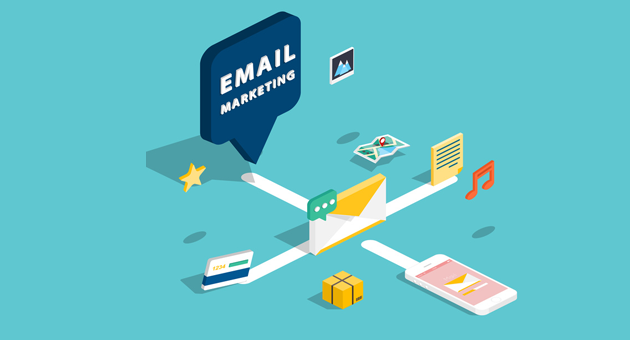
It’s considered one of the most profitable types of direct marketing. Email marketing isn’t just about using email to promote your business’s products and services.
It lets you segment and personalize for your audience. And here, the open rate is essential to understand a campaign’s success.
It’s also part of a broad strategy that includes spreading your brand, sharing relevant content and building customer loyalty.
Affiliate marketing
Also known as affiliation marketing, it’s a low-cost marketing method that, if well designed, can achieve unexpectedly good results.
It’s based on creating a network of intermediaries (affiliates) who promote your business. In return, they receive a commission for every sale, lead or customer they bring you.
For the affiliate, joining is free, so the earning potential is high. In short, a good deal for everyone.
Viral marketing
With the rise of social media, it’s relatively easy for a news story or any other information to spread like wildfire.
Why wouldn’t a marketer take advantage of that? After all, it’s good old word of mouth, but run through the amplifier of social media.
One study found that for content to go viral, it had to meet at least these three conditions: usefulness, emotion and positivity.
Guerrilla marketing
Guerrilla marketing is to marketing what guerrilla warfare is to traditional warfare: instead of infantry divisions and conventional weapons, it uses unusual methods and plays with the element of surprise to grab the audience’s attention.
At least, that’s how Jay Conrad Levinson saw it when he coined the term in Guerrilla Marketing (1984) to announce a new, unorthodox and disruptive way of doing marketing.
Guerrilla marketing doesn’t require a big budget, but it does require large doses of imagination and creativity.
Relationship marketing
Building loyalty. Building a web of affection. Making sure it doesn’t end once the customer has bought the product. Making it last and continue.
That’s how we could sum up relationship marketing, a set of strategies and actions aimed at strengthening relationships with customers beyond the sale itself.
In very competitive markets, where many brands fight over the same niche, building bonds of loyalty with customers can make all the difference.
Emotional marketing
Ever since Claude Hopkins and his Scientific Advertising (1924), we’ve known how important psychology is when promoting a product or service.
Emotional marketing aims to build an emotional relationship between the customer and the brand, so that the customer comes to see the brand as their own.
We could consider it a step above relationship marketing. But the goal is the same: to connect more deeply with the audience and build emotional loyalty with the customer.
Neuromarketing
Neuroscience and cognitive science have been revealing how the human mind works for decades. For example, we know that many of our decisions aren’t conscious. Or only become so after we’ve made them.
Neuromarketing is the application of those discoveries to marketing. It tries to understand what leads a customer to choose one product over another. To paraphrase the poet Gabriel Celaya, it’s a weapon loaded with the future.
Social media marketing
Social media marketing is the way to take advantage of how deeply rooted social media is in our lives. Facebook, Twitter, Instagram or TikTok are a gold mine for any business that wants to become known, promote its services or products or build a community.
And while in other types of marketing it seems everything has already been invented, on social media the potential for innovation and invention still knows no limits.
Content marketing
Content marketing is a very effective strategy focused on creating and distributing relevant content through blogs, social media or emails. The idea is to attract and retain customers, but in a less intrusive and more indirect way than traditional marketing.
It’s closely tied to inbound marketing, as it’s the cornerstone of its strategy. And judging by some studies, its benefits are undeniable: it generates three times more leads than traditional methods and is one of marketers’ favorite tools because of its high ROI.
Influencer marketing
Social media has given rise to the influencer. Influencers are opinion leaders who carry weight because of their large number of followers.
Influencer marketing consists of collaboration between a company and influencers to reach a wider audience and improve the brand image.
This type of marketing is currently booming. And according to some studies, it will keep growing in the coming years.
Search engine marketing
Nowadays we can say that what isn’t on the internet doesn’t exist, right? Search engine marketing is all about building your business’s online visibility and presence.
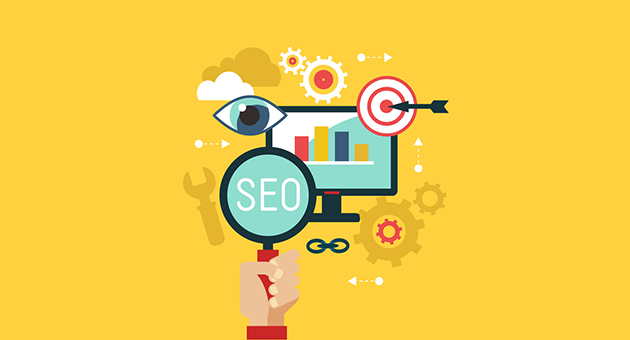
The goal is for consumers to find your business. And that involves a set of free (SEO) and paid (SEM) strategies to gain presence on search engines such as Google, Bing or Yahoo.
SEO marketing and local SEO
Here we have two types of marketing in one: the free arm of search engine marketing, based on a set of strategies to optimize websites for search engines such as Google.
The goal is for your website to rank among the top search results when consumers type relevant terms related to your business (keywords).
SEO includes different actions, such as keyword research to optimize a website’s content or link building.
And an important subtype: local SEO for brick-and-mortar businesses that want to attract customers from search engines and Google Maps.
SEM marketing
It’s the paid version of search engine marketing, although originally SEM marketing also referred to SEO.
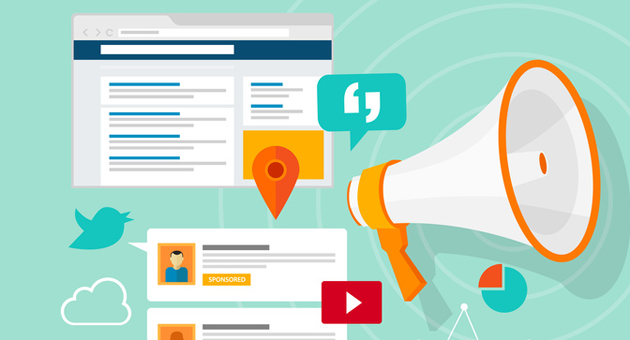
It’s based on paid advertising strategies such as Google ads, which are the ones that appear at the top of the first page, before the organic (or unpaid) results.
Its results are more immediate than SEO, which takes more time and patience. But, like SEO, it stands out as a type of marketing that is hardly intrusive or annoying.
Remarketing
Not all users who visit your website buy. And that’s a very painful truth for many companies. How do you get the user who visits your website to become a customer?
In marketing, we talk about “conversion” when a user becomes a customer. And to achieve it, there’s remarketing. That is, the set of actions to get the customer who has visited your website (or has even signed up without paying) to end up buying. An example: that email with tempting products you get from Amazon shortly after browsing its store.
Performance marketing
It’s a type of digital marketing based on measurable results, such as pay per click. It’s also related to other types of online advertising, such as pay per lead, pay per thousand impressions or pay per conversion.
In practice, performance marketing (also called results-based marketing) is simply paid campaigns on the internet, such as Google Ads or Facebook Ads.
Growth marketing
It’s a type of marketing based on using data and experimentation to define marketing strategies.
It analyzes which types of campaigns work best to achieve a given goal (a sale, a lead, a download) and introduces improvements and changes based on the results.
It uses techniques such as A/B testing and tools such as Google Analytics. Constant innovation is part of its DNA.
Video marketing
The arrival of YouTube in 2005 marked the beginning of a powerful new way of doing marketing: video marketing.
It consists of using videos to promote and sell your products and services, increase the engagement of your (potential) customers and educate them with relevant content.
Its effectiveness is overwhelming: wherever there’s a video (in a blog article, an ad, a social media post), conversion rates, engagement and traffic go up.
Strategic marketing
It’s a way of making sure your marketing campaigns are well planned, target the right audience and, in short, are effective.
Strategic marketing is built in four stages: planning, where the goals are defined; analysis, where the audience and the competition are studied; the development stage, where its implementation is designed; and, finally, the execution stage.
It requires a good long-term vision, as well as large doses of analysis, time and patience.
Operational marketing
For a marketing strategy to work, it has to be broken down into achievable short-term goals. That’s where operational marketing comes into play.
Its role, its method, is to turn plans into actions with immediate results. It’s usually contrasted with strategic marketing, which is more focused on the long term. But they can also be seen as complementary.
Without operational marketing, the strategy can’t be implemented successfully. And without a strategy, operational marketing is as effective as a sniper without a scope.
Product marketing and services marketing
The main difference between a product and a service is its tangibility. A product can be perceived. A service can only be experienced.
And that affects how it’s marketed: one focuses on the benefits and value it provides (product marketing) and the other on the perishable, unique nature of the experience (services marketing).
Today, however, both product marketing and services marketing focus on experience: Coca-Cola offers a product (a soft drink) but promotes itself with experiences (“Feel the taste”).
What services marketing hasn’t managed yet is to offer samples. At most, a free night by the sea, which is no small thing.
Personal marketing
It’s a set of strategies aimed at self-promotion, or promoting your own personal brand. The product and the brand, therefore, are you. And the goal is to find clients or a job.
Social media has become the ideal ecosystem for people to position themselves as experts by showing their skills, values and experience to potential employers or clients.
Email marketing, backed by a website that ranks well, is another favorite technique.
Brand marketing
Brand marketing uses all marketing techniques and channels (ads, content, social media, etc.), but instead of focusing on the company’s products or services, the focus is on the brand.
The brand is a company’s identity. And, like any identity, a way to stand out from the competition. Brand marketing is a way of establishing and strengthening relationships between the brand and consumers.
Internal marketing
A company also needs to sell itself. An employee who identifies with the brand and shares its values is a committed employee.
With internal marketing, a company seeks to improve its employees’ motivation and productivity with techniques such as recognition for a job well done, personalization, work-life balance and flexible hours, team building, and professional training and development.
Employer branding marketing
Attracting and retaining talent is one of the biggest challenges companies face. And that’s where employer branding marketing comes in: a set of strategies aimed at boosting the company’s good reputation among job seekers.
The goal is to attract that talent by projecting an employee-centered company culture. Some companies even have dedicated platforms, social channels or blogs to boost their employer branding, or employer brand.
Trade marketing
Also known as distribution channel marketing, it consists of a set of actions to increase demand for a product by positioning it strategically at points of sale.
A classic (and frequently used) example is displaying products on shelves placed in strategic spots (such as a supermarket checkout) with 2-for-1 offers to make them more attractive to consumers.
360 marketing
It’s an ambitious marketing strategy that uses different platforms (online and offline) to reach consumers.
For it to work, the message has to be consistent across all channels and, at the same time, adapted to their particular features.
The idea is for the brand to be everywhere so it reaches a larger number of consumers. To launch it successfully, you need to put a lot of planning into it.
Mobile marketing
More than half of global web traffic comes from mobile phones. That’s why a new form of marketing has emerged in recent years: mobile marketing.
It includes, among other techniques, developing mobile apps and ranking them in the main app stores, such as the App Store and Google Play. The latter is known as ASO, which is basically SEO for mobile apps.
Here, as McLuhan predicted, the medium is the message. And this forces marketing teams to adapt their strategy to a new type of consumer, different from the desktop computer user. A new paradigm, yes.
SMS marketing
Just when everyone had written off SMS, it turns out to be more alive than ever. Paradoxically, a form of mobile messaging that is barely used personally is surprisingly effective in marketing terms.
The key: short, clear, personalized messages. Straight to the point. And you don’t even need the internet. The result: open rates (95%) and click rates (19%) far higher than those of email marketing.
WhatsApp marketing
With more than 2 billion users worldwide, WhatsApp is the instant messaging platform par excellence. And with figures like that, it deserves a marketing method named after it.
More interactive than SMS marketing, WhatsApp marketing makes the most of both worlds: it’s hardly intrusive and offers high conversion rates, sales and lower costs.
To implement it, WhatsApp designed its own app for businesses: WhatsApp Business. There’s also an API that lets you develop custom solutions for those who make intensive use of marketing on this platform.
Global marketing
It’s a type of marketing focused on a global market. But since the global emerges from the local, it requires adapting the strategy to the particularities of each country where the product will be sold.
It first requires market research to identify the countries where the product can succeed. This strategy often also includes adapting the product to each country’s cultural particularities, as McDonald’s does with its burgers.
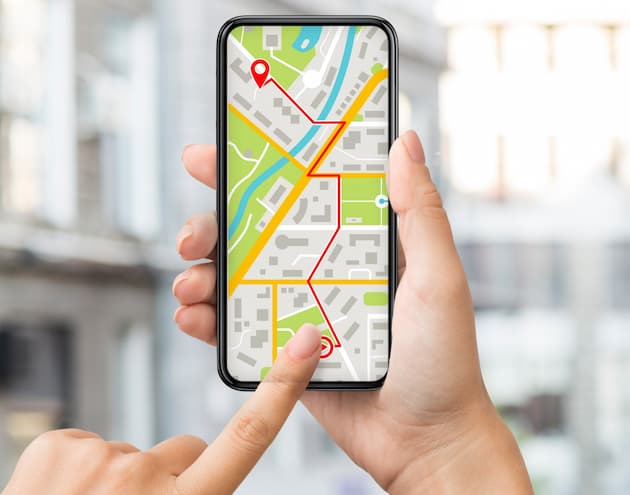
Geomarketing
It’s a method based on the premise that geography shapes similar consumer behavior. The challenge lies in defining the geolocation well in order to implement the right marketing actions.
It’s not an easy challenge. For example, to a European, Asia and Latin America may seem like two homogeneous regions, when in fact they are two culturally diverse (sub)continents: the same marketing campaign that succeeds in Chile can be a disaster in Mexico.
Local marketing
It’s a type of geomarketing focused on the particular features of local markets: a city, a district, a neighborhood.
It’s ideal for businesses with a physical presence, where personal interaction with the consumer is essential.
The key to its success: precisely defining the type of consumer, or target audience. By the way, having a physical store doesn’t mean you should neglect the online side: a geolocated website is always a plus.
Sensory marketing
Our senses influence how we perceive the world around us. And also how we consume.
Sensory marketing focuses its strategy on stimulating the senses in order to offer the consumer a more intense experience.
For example: a perfume store (scent marketing) or a fast food chain with mouth-watering images of its menu (visual marketing).
Interactive marketing
It’s aimed at encouraging consumers to engage with the brand. It’s effective for attracting customers, retaining them, getting to know them better and adapting the product to their wants and needs.
Social media leads the way in this type of marketing. For example, a bookstore that asks its Facebook followers what book they’re going to read next. Not only will it encourage engagement, but it will also learn which books are most popular so it can sell them.
Experiential marketing
More and more companies are focusing their marketing strategies on offering experiences to their customers in order to evoke positive emotional responses.
It’s an effective way to strengthen the relationship between consumer and brand. By focusing on the experience (instead of the product), it engages the consumer in a lasting way.
Coca-Cola’s Happiness ATM or the sleepover in an IKEA store would be famous examples.
Types of marketing by activity
In recent years, new forms of marketing linked to different activities have also appeared. Because of their importance and uniqueness, we’ve decided to cover them separately.
Let’s look at the most relevant ones👇
Real estate marketing
It consists of a set of strategies that real estate companies use to attract customers who want to rent or buy homes, and owners who want to sell or rent them out.
Thanks to the internet, both sellers and buyers are better informed. So creating relevant content is essential for this type of marketing to succeed. It goes without saying that videos and images are indispensable in this type of marketing.
Tourism marketing
It affects a broad sector that carries a lot of weight in Spain: hotels, restaurants, leisure venues and activities, car and holiday apartment rental companies, and transport.
The product is based on experience, which is why experiential marketing plays an important role when planning a good strategy. Online reputation (opinions, reviews) is another extremely important aspect because of its influence on potential customers.
Sports marketing
It’s one of the most influential forms of marketing in the world. Fans, professional athletes, sports clubs and brands form a circle that revolves around strong feelings of belonging, loyalty, admiration, love and hate.
It uses every online and offline marketing technique imaginable. But if we had to highlight one peculiarity, it would be the relentless advertising synergy between professional athletes, clubs and sports brands.
Political marketing
It’s the application of marketing techniques to politics. Originally, it was only used in election campaigns. But given politics’ current tendency to be in permanent campaign mode, political marketing is now part of its backbone.
In recent years, political marketing has found its field of action on social media. Television and radio are reserved for the election campaigns themselves.
Cultural marketing
Cultural companies came to marketing late and unevenly. Film and music were always the sector’s vanguard, but other areas such as art and literature (museums, theaters, bookstores) have been more reluctant.
That has changed: now any museum, bookstore or theater uses social media to promote itself and SEO to improve its search rankings, and even hires influencers.
Educational marketing
It focuses on attracting students, but with a peculiarity: just like with Santa Claus, the buyer persona is really the parents.
Given the sector’s reluctance to treat education as a commodity, educational marketing has been slow to develop. Relationship marketing to build customer loyalty is one of its strengths, and reputation, more than price, is one of the aspects it cares about most.
Fashion marketing
Fashion marketing is one of the most creative and innovative forms of marketing, because of the nature of the sector, which is constantly renewing and changing. And because of its audience: massive and insatiably hungry for novelty.
It uses every known marketing technique. Its latest trends? The use of virtual and augmented reality, and an emphasis on sustainability with materials that respect the environment and animals.
Healthcare marketing
Healthcare marketing is increasingly relevant in countries such as Spain, where demand for private healthcare grows year after year.
Local marketing plays a very important role and, in recent years, social media has become a showcase for many healthcare professionals to become known among the public and stay in constant contact with their patients.
Ecomarketing
Ecological marketing (or green marketing) has made innovative inroads among all kinds of companies, not just those that sell eco-friendly products.
For example, car manufacturers promote electric vehicles (which also pollute, but less), and hotel companies tell their audience about their sustainable actions (digital menus, less plastic).
Judging by the state of the planet, this type of marketing has a secure future.
And there are even more types of marketing
50 types of marketing is a round number to give you an idea of how its techniques have evolved in recent decades.
Who would have told us twenty years ago that there would be such a thing as influencer marketing or local SEO? Or that something called inbound marketing would overtake traditional paid marketing as the main strategy? Or that social media would be companies’ favorite channel for promoting themselves online?
With the internet (and whatever comes next), the possibilities are endless. Many of the types of marketing we’ve shown you in this article prove it.
Some advice for navigating these waters without running aground? Be open to new changes and experiment fearlessly with new channels and new formats. And see opportunities where others only see eccentricities.